
Your Sleep.
Properly Restored.
Can't fall asleep, waking at 3am, or waking up as tired as when you went to bed? We find out what is keeping your brain switched on at night, from your body clock and stress hormones to blood sugar, hormones and gut health, and build a plan to help you sleep deeply again.
We can help with
- Trouble falling asleep, with a mind that won't switch off
- Waking in the night, often between 2am and 4am
- Waking too early and not getting back to sleep
- Sleep that doesn't refresh you, and daytime exhaustion
- Feeling "tired but wired" in the evening
- Sleep changes with perimenopause, menopause or stress
- Poor sleep alongside anxiety, low mood or brain fog
Sleep problems rarely have a single cause
Poor sleep is often treated as a habit to fix or a symptom to sedate. But how well you sleep depends on your brain's body clock, your stress response, your hormones, your blood sugar overnight, your gut and what you do every day. When sleep advice hasn't worked and tests come back "normal", too many people are left lying awake with no explanation and no plan.
Three sleep patterns, different root causes
When your sleep goes wrong tells us a lot about why. Most people recognise themselves in one or more of these.
"I can't fall asleep"
You're exhausted, but the moment your head hits the pillow your mind starts racing.
- Stress hormones still high in the evening
- A body clock running late
- Evening light, screens, caffeine or late exercise
- Anxiety and an overactive "alert" system in the brain
"I wake in the night"
You fall asleep fine, then wake in the small hours, wide awake and unable to drift off again.
- Blood sugar dipping overnight, triggering adrenaline
- Alcohol wearing off
- Hormone changes, including perimenopause
- Digestive discomfort, pain or a busy bladder
"I wake up unrefreshed"
You spend enough hours in bed, but you wake up foggy, heavy and longing for more sleep.
- Light, broken sleep with too little deep sleep
- Low iron, thyroid or other nutrient problems
- Inflammation, pain or restless legs
- Breathing problems at night that need a GP check
What's normal, and what's worth checking
Everyone has the odd bad night. The pattern, and how much it affects your days, matters more than any single night.
Usually fine
- A poor night before something important
- Lighter sleep for a few nights after a late meal or a drink
- Jet lag or a disrupted week that settles
- Waking briefly in the night and drifting back off
Worth looking into
- Poor sleep three or more nights a week for over a month
- Regularly taking more than 30 minutes to fall asleep
- Waking most nights and lying awake for long periods
- Waking unrefreshed, even after enough hours in bed
- Relying on alcohol, tablets or remedies to get to sleep
- Low mood, anxiety, brain fog or irritability alongside poor sleep
See your GP promptly
- Loud snoring, pauses in breathing, gasping or choking at night
- Falling asleep during the day without meaning to, especially while driving
- Acting out dreams, or sudden muscle weakness with emotion
- Thoughts of harming yourself: call 999, NHS 111 (press 2) or Samaritans 116 123
Sleep is a whole brain, body and mind process
Falling asleep means your brain has to switch off its "alert" systems and switch on its "rest and repair" systems. That depends on three things working together.
Brain. The body clock, melatonin, and the balance between the brain's arousal and calming systems. This is where functional neurology comes in.
Body. Cortisol rhythm, blood sugar overnight, thyroid and sex hormones, iron and magnesium, inflammation and the gut.
Mind. Stress, worry, low mood and the thinking habits that keep you awake. This is where integrative functional psychiatry comes in.
How our approach works →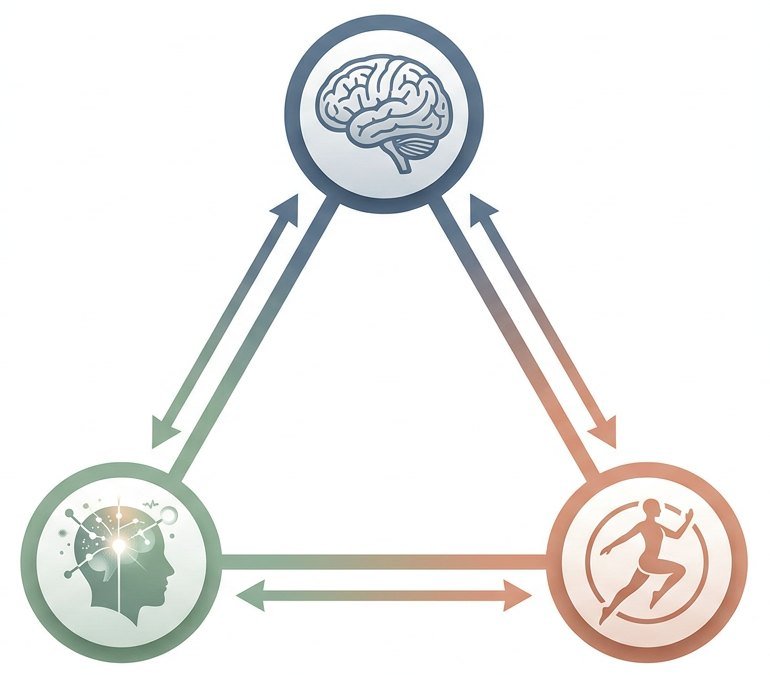
What we look at
We don't guess. We look at each of the areas research links to poor sleep, then focus on the ones that matter most for you.
Body clock
Light, meal timing, shift work and late nights can push your internal clock out of step, so melatonin arrives at the wrong time.
Stress and the nervous system
When cortisol is high at night, or the nervous system is stuck in "on", you feel tired but wired and sleep stays light.
Blood sugar
A sharp dip in blood sugar overnight can release adrenaline and wake you suddenly, often in the early hours.
Hormones
Falling progesterone and oestrogen in perimenopause, low testosterone and thyroid changes can all disturb sleep.
Gut health
The gut helps make serotonin, the building block of melatonin, and gut inflammation and discomfort can break up sleep.
Nutrients
Low iron is linked to restless legs; magnesium, vitamin D and B vitamins all play a part in calm, deep sleep.
Brain function
A functional neurological assessment looks at how well the brain's calming and arousal systems are balanced.
Mood and the mind
Worry, rumination and low mood both cause and follow poor sleep. We work on both sides of that loop.
Daily habits
Caffeine, alcohol, screens, exercise timing and evening routines: small changes that often make a big difference.
How we assess your sleep
Three layers of assessment build a clear picture of how you sleep, and why.
Sleep profile and diary
Validated sleep questionnaires and a simple two-week sleep diary, so we can see your real pattern rather than relying on memory.
Functional neurological assessment
At your Full Consultation: an examination of the brain and nervous system, including balance between the "alert" and "rest" systems.
Laboratory profiles
Only the tests your history points to, such as a daily cortisol rhythm, blood sugar markers, thyroid, iron, sex hormones or gut health. Quoted before anything is ordered.
Your results, in one plan
Everything comes together in a personal 12-week sleep plan, with a sleep diary baseline to measure progress against and a clear list of what to change first.
What to expect
Start with a free 20-minute conversation. Then, if you'd like to go ahead, each step builds on the one before, online or at the clinic in Macclesfield.
Start here
Discovery Consultation
Your sleep story
- When your sleep changed, and what makes it better or worse
- Review of your sleep questionnaire and two-week sleep diary
- Stress, mood, hormones, diet and daily routine
- Medical, medication and family history, and any past lab results
- Simple first changes to start straight away
- Recommended tests agreed with you, if any are needed
Full Consultation
Sleep: a root cause analysis
- Functional neurological examination of the brain's arousal and stress systems
- Your lab results explained in plain English
- The main drivers of your sleep problem identified
- A personal 12-week sleep plan: body clock, food, stress, movement and evenings
- Written report, with a summary for your GP if you would like one
- 14 days of follow-up messaging
Follow-Up Consultation
Keeping you on track
- Progress reviewed against your sleep diary baseline
- What has improved, and what is still hard
- Your plan adjusted, step by step
- Supplement review, with your prescriber in mind
- Liaison with your GP and other professionals
Talk to Alan, free, for 20 minutes
Tell us what your nights are like, and we'll tell you honestly whether we can help and what the first step would be. No cost, no pressure.
- By phone or video, at a time that suits you
- Get a sense of what might be driving your sleep problem
- Find out which consultation, if any, is right for you
Prefer to talk now? Call 07814 528087 or email alan@neurogenicsclinic.co.uk.

Alan Lee
Alan is a clinician, educator and researcher in functional medicine and functional neurology, with a special interest in functional and integrative psychiatry. He looks at sleep as part of the whole picture: brain, body and mind.
He works alongside GPs, sleep services, therapists and specialists to find what is keeping you awake, and turns it into a clear, practical plan.
Trained at: Institute for Functional Medicine · The Kharrazian Institute · Carrick Institute of Neurological Sciences · Association of Functional Nutrition and Lifestyle Medicine (CFN-S) · Psychiatry Redefined
More about Alan →Questions people ask
What happens in the free 20-minute conversation?
It is a relaxed phone or video call with Alan. You describe what your sleep is like, he explains whether and how he can help, and you decide if you would like to book. There is no cost and no obligation.
Do you prescribe sleeping tablets?
No. We don't prescribe, and we will never ask you to stop medication your doctor has prescribed. If you would like to reduce sleeping tablets in future, that is a conversation for you and your GP, and we can support the sleep habits that make it easier.
Is this the same as CBT for insomnia?
No. Cognitive behavioural therapy for insomnia (CBT-I) is the first-line treatment recommended by NICE, and we encourage it. We look at what CBT-I doesn't: body clock, stress hormones, blood sugar, hormones, gut health, nutrients and how the brain's arousal systems are working. The two fit well together.
What if I think I have sleep apnoea?
Loud snoring, pauses in breathing, gasping or choking at night, or falling asleep during the day, especially while driving, should be checked by your GP, who can refer you to an NHS sleep service. We can support you alongside that, but we don't diagnose or treat sleep apnoea.
Do I need a GP referral?
No. You can book directly. With your permission we will share a summary with your GP, and we will always tell you if something needs medical attention.
Can I do everything online?
Yes. Every consultation can be online, anywhere in the UK, or in person at the clinic in Macclesfield.
How much does it cost?
The first 20-minute conversation is free. Discovery Consultation £95 (60 mins), Full Consultation £175 (90 mins), Follow-Up Consultation £95 (60 mins). Lab tests are optional and quoted separately, before anything is ordered.
Ready for a better night's sleep?
Find out what is keeping you awake, and what to change first.